
What Scott County Deed Records Preserve
The Scott County Clerk records deeds and many related land instruments. A deed names the parties, the recording date, the land description, and the interest conveyed. The wording matters. Some instruments transfer broad ownership rights. Others correct a prior record. Some convey only the signer’s existing interest. Some carry land out of an estate or court case. So read the document type first. Never treat an index hit as a sale on the name alone.
| Deed Type | What It Does | Common Use |
|---|---|---|
| Deed | Conveys the interest stated in the instrument | Ordinary voluntary transfers |
| Deed correction | Repairs an error or omission in an earlier instrument | Name, description, or reference corrections |
| Commissioner’s deed | Documents a transfer ordered through a court process | Judicial sales or partition matters |
| Affidavit of descent | Places sworn heirship facts in the land record | Estate and inheritance research |
| Deed of restrictions | Records covenants that affect land use | Subdivision and development controls |
Mortgages, assignments, releases, easements, plats, restrictions, mechanics liens, judgments, and lis pendens often sit beside deeds in the same land-record system. Each can burden, secure, describe, or warn about an interest without conveying a deed’s ownership right. Read the selected image in full. Then check related entries. Releases, corrections, and later transfers often hide there.
Scott County’s Party-Name Deed Index
The Scott County Clerk public land-record page routes web users to eCCLIX. It flags one key limit: the index searches party names. It does not work as an address index. Have only a street address? Start at the PVA. There you can learn the owner and deed reference. Then return to the Clerk. Scott County residents doing noncommercial research can register for free access. It is capped at five county searches per day. Commercial and out-of-county access differs. The vendor sets subscription or day-use terms for those users.
| Index input | How to use it | Local caution |
|---|---|---|
| Party last name | Begin with the surname and few filters | Test initials, spelling, trust, and entity forms |
| Party first name | Add after the surname results are reviewed | Over-filtering can hide an abbreviated entry |
| TYPE code | Leave blank at first, then narrow by instrument family | The code list covers more than deeds |
| Book and page | Open a known record directly | Copy the reference exactly from the source |
| Party by date | Limit a known name to a likely period | Recording and signing dates may differ |
The Clerk’s official pages do not publish the earliest year of eCCLIX coverage. That gap stays open. An empty result proves nothing. Coverage or access may block the web search. Use the Deed & Recording Room, library holdings, or an archive route instead. The Scott County eCCLIX sign-up screen shows the registration gate that precedes any deed-index session.
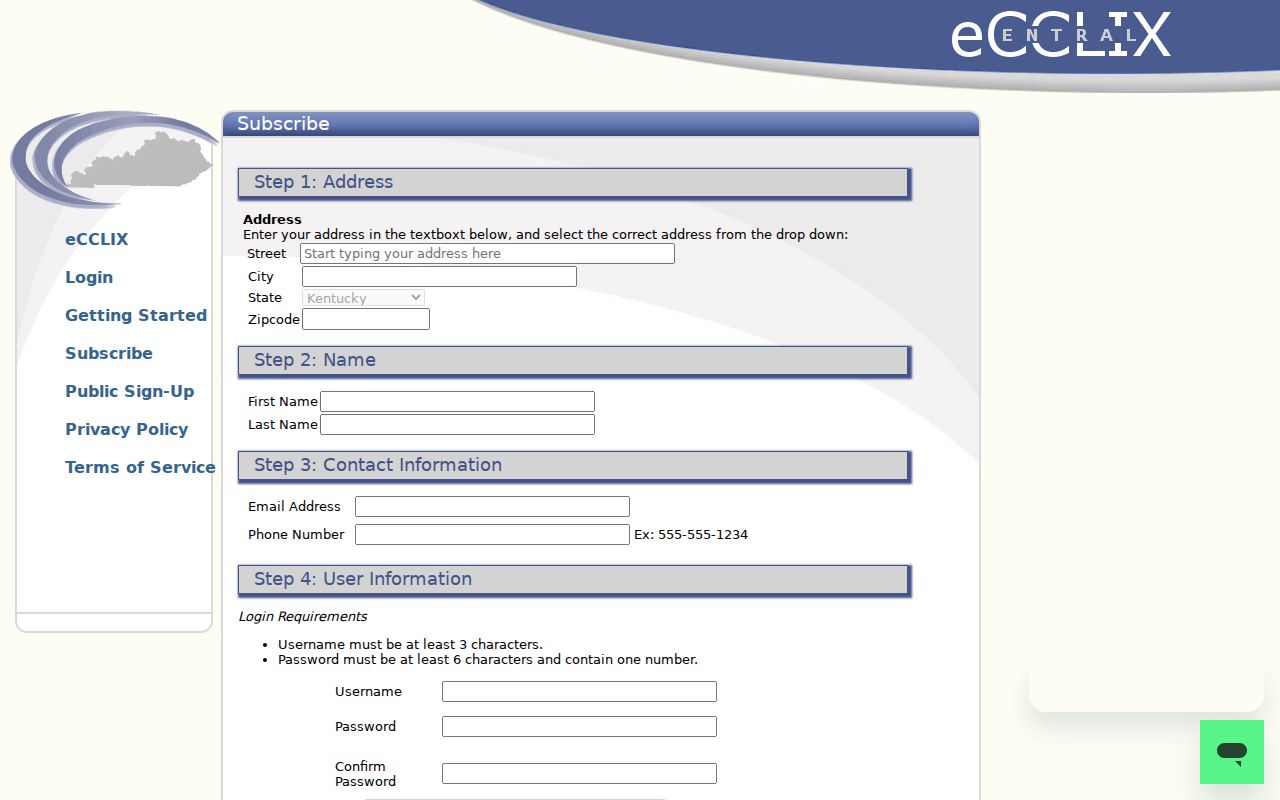
The registration screen controls entry only. It says nothing about deed coverage or search results, so test the live index and note your search date.
Read the Land Description in Scott County Deeds
A name match is only a start. Confirm the instrument describes the same land. Compare lot and block, subdivision, acreage, metes-and-bounds calls, adjoining owners, road names, easements, rights-of-way, and source-of-title language against the parcel. A metes-and-bounds description defines a tract by courses, distances, and monuments. A source-of-title clause points back to the deed through which the grantor acquired the land. Parcel numbers can change. Splits, consolidations, annexations, and mapping updates all shift identifiers. An older deed may describe a parent tract rather than today’s parcel. The Scott County PVA sales history and deed reference speed the hunt, but the recorded image controls the comparison. A parcel map is context only. Maps do not settle legal descriptions. The dedicated Scott County parcel maps resource explains how to pair mapped geometry with a recorded plat. Note: Keep every old road, farm, tract, and subdivision name as a clue whenever the modern street address does not appear.
Trace Scott County Deeds Through Grantors and Grantees
The grantor gives the stated interest. The grantee receives it. A chain of title is the linked sequence of transfers for one tract. Start with the newest reliable conveyance and walk backward. Record each party spelling, date, deed type, book and page or instrument number, and land description, then repeat the search under the prior party’s name.
- Use the PVA owner and deed reference, or a known book and page, to locate the latest likely deed.
- Read the image and record its grantee, grantor, legal description, source-of-title clause, and any exhibits.
- Search the current grantor as an earlier grantee. Compare the new result’s description with the same tract or parent tract.
- Continue until the web index ends, the description changes, or an estate, court order, split, or consolidation requires another source.
- Grantor
- The party transferring the interest stated in the instrument.
- Grantee
- The party receiving that interest.
- Chain of title
- The linked series of instruments for the same land interest.
- Book and page
- A volume-and-page reference used to retrieve a recorded document.
- Instrument number
- A distinct recording identifier when one appears in the index.
Scott County Deeds Before the Online Horizon
The Clerk’s official pages do not publish the first year available in eCCLIX. Older Scott County deeds need a source hierarchy. The Scott County Public Library microfilm collection documents deeds from 1783 through 1886, mortgages from 1842 through 1888, and wills from 1792 through 1924. Selected tax books, court order books, and newspapers appear there too. The library’s digital archive keeps adding scanned deed, will, mortgage, and tax-land-sale material. Scott County formed in 1792. The library’s deed coverage starts earlier. That difference points to predecessor-jurisdiction history, not to county recording of every 1783 item. KDLA also lists courthouse disasters in 1837 and 1876. A disaster year does not prove total loss. Check overlapping Clerk books and library film. KDLA inventories, FamilySearch images, tax books, and newspapers fill in the rest. Only then treat a gap as final.
Historic-source rule. Missing online images show an access gap, not the absence of a Scott County transfer. Compare more than one repository.
DOCALERT Watches Scott County Filing Names
The Clerk links DOCALERT, a free email alert service. It watches a chosen person or business name. A deed or mortgage may be filed under that name. The service then emails prompt notice to the owner. That notice has limits, though. The alert cannot block a document. It cannot prove fraud. Nor can it replace review of the official recorded image.
Note the instrument number and recording date. Add the parties and the document type. Pull the Clerk’s record, and compare the legal description. Contact the Clerk or the proper authorities if the filing appears unauthorized. Keep any report on the parcel and instrument rather than republishing personal mailing details.
Scott County Deed Access Changes With System Updates
Scott County deed access keeps changing. The Scott County Clerk announced a new website for March 3, 2026, built to improve navigation for land-deed records, forms, hours, and other services. The eCCLIX registration page shows a 2026 vendor build. A later notice scheduled both the deed rooms and eCCLIX to close on September 15, 2026 for a system installation. Other Clerk services stay available that day.
Changes like these reward a careful access log. Write down the search date, account type, exact party spelling, filters, and any system message. Assume nothing from an empty screen. When the portal or deed room is offline, call the Clerk or use the known-document request route. Recheck saved links after an update, since navigation and image controls can change without altering the underlying instrument.
Order a Scott County Deed Copy
A known deed copy is easy to order. The Clerk’s online document request is the digital path. Mail, a specified email route, and a counter visit all work too. The counter is Deed & Recording Room 112, in the courthouse at 101 E Main Street in Georgetown, open Monday through Friday from 8:30 a.m. to 4:30 p.m.
The request form asks for details. Provide the document type, party names, filing date, and any known book/page, instrument number, or property address. Flag whether certification is needed. Add delivery contact details, and consult the Clerk’s land-record instructions for the official online and counter routes for Scott County deed records.
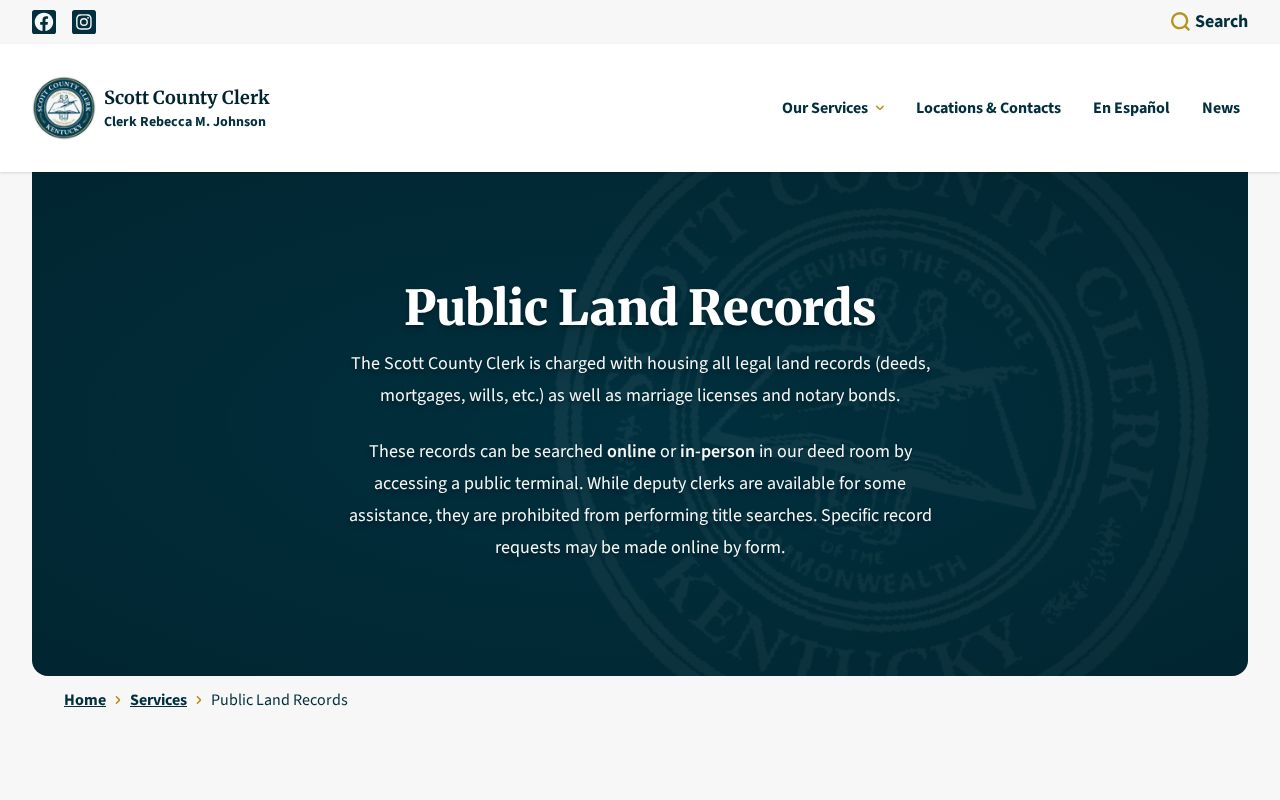
This office page is the right fallback. Use it when the vendor login, a party-name search, or an image display fails to answer the request. Copy fees follow a set scale. Standard physical copies run 25 cents per page, certified copies cost $5 per document plus postage and handling, and large plats go for $3 each. A known-document request carries a target of up to three business days.
Confirm the current charge when ordering. Certified records deserve one extra call. Ask for the office’s current “good through” date, and preserve the certification separately from any informal web image.
Recorded, not guaranteed. Scott County deed records show instruments accepted for recording. The index is not a title opinion, and Clerk staff do not determine ownership or legal effect.
Some requests fall outside the ordinary copy path. For those, ask for an existing, identified record under the Kentucky Open Records Act. KRS 61.872 governs written requests and inspection methods. KRS 61.874 covers copies and fees. A broad request asking staff to build a title chain is not the same as requesting a known deed, so name the record you want.
Note: Whenever a Scott County deed image is saved, record the access date, exact party spelling, document type, and retrieval key.